
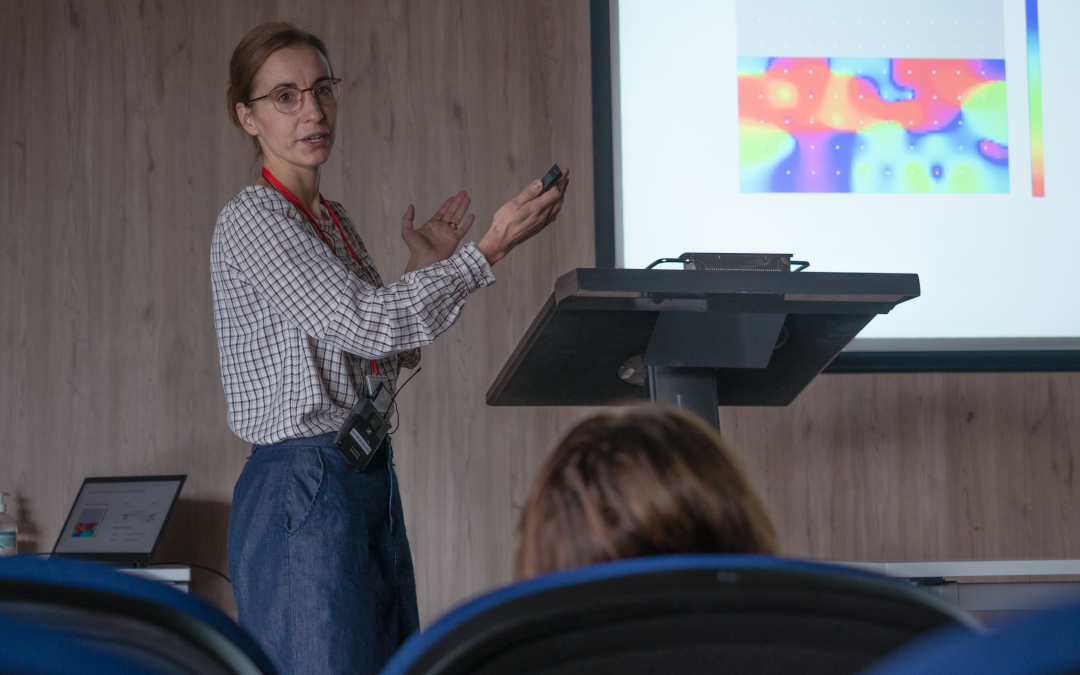
On December 16 and 17, the first International Congress “The Brain & The Chip” was held at the Arenales Building of Miguel Hernández University (UMH), bringing together leading researchers in the field of neuroengineering from around the world.
The congress successfully gathered an important multidisciplinary group of international researchers working in this field with the aim of reviewing current knowledge and discussing future challenges related to cortical visual neuroprostheses. Experts in ophthalmology, neurosurgery, neurology, neuroengineering, neuroscience, electronics, biomaterials, and artificial intelligence attended the event. They presented cutting-edge research on artificial vision and discussed the main challenges and future directions of visual prostheses beyond the retina, focusing on the development of new cortical visual prostheses designed to help blind or visually impaired individuals improve their mobility and, more ambitiously, perceive and navigate their surroundings.
This edition of The Brain & The Chip was the first event of its kind organized by the Biomedical Neuroengineering Group of Miguel Hernández University, led by Professor Eduardo Fernández. Attendance results reflected the growing international interest in this area of neuroengineering, as demonstrated by the full capacity reached at the Assembly Hall of the Arenales Building on both days.
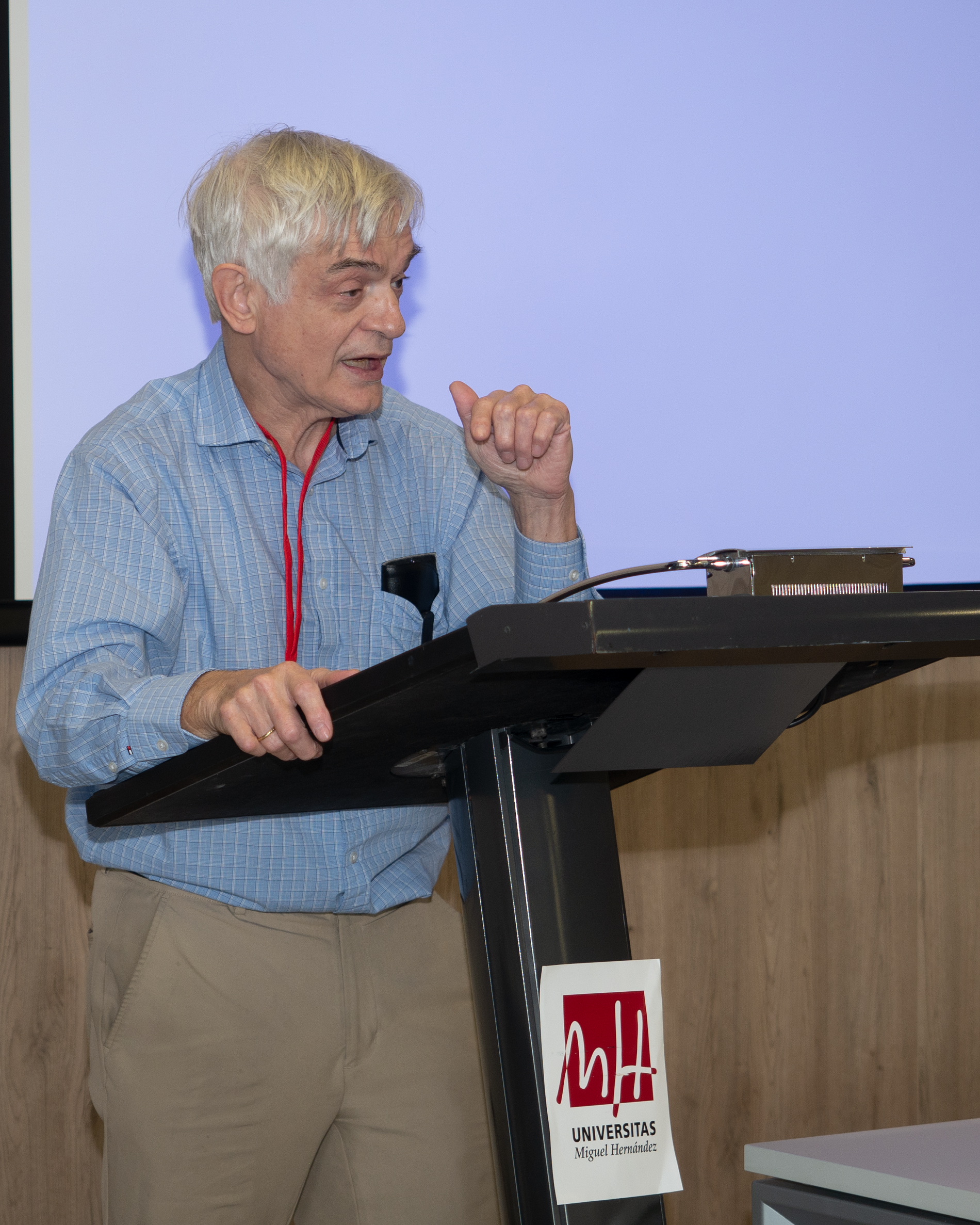
Gislin Dagnelie during the Congress
The conference featured internationally recognized figures in ophthalmology, including Andrea Cusumano, professor and researcher at the University of Rome Tor Vergata (Italy) and member of The Macula Foundation New York (USA), who delivered the lecture:
“Restoration of Central Vision with the PRIMA Microchip in Patients with Advanced Atrophic AMD (GA)”
Another distinguished invited speaker was Gislin Dagnelie, Associate Professor of Ophthalmology at the Johns Hopkins University School of Medicine, whose presentation was entitled:
“The Challenge of Creating a Perceptually Intelligible World and First Results of the Intracortical Visual Prosthesis (ICVP) Project”
In addition to the scientific sessions scheduled for the congress, the Odeón Cinema in Elche hosted the concert “Music, Synesthesia and the Brain”, performed by the musical duo Octavio De Juan (viola) and Ángela Alonso (piano), who interpreted works by Schubert, Brahms, and Scriabin. This event formed part of the activities of the First International Congress on the Brain and Artificial Vision, as the conference sought not only to share theoretical and practical knowledge, but also to provide enriching cultural experiences while maintaining a fresh and engaging atmosphere.
During the concert, the musical piece “Bern’s Dream” premiered for the first time. The work was based on brain recordings obtained from a blind individual and was created by Miguel Franco, principal double bass player of the RTVE Symphony Orchestra. He transformed neural recordings acquired at Miguel Hernández University using a new intracortical microelectrode brain implant capable of inducing the perception of simple shapes and letters in a blind person. The results of this research had previously been published in December 2021 in the prestigious Journal of Clinical Investigation.
Attendees also enjoyed a projection of lights and colors while pianist Ángela Alonso performed seven Preludes from Op.11 by Aleksandr Scriabin. The music itself generated a visual color spectacle, as different tones and intensities were projected depending on the notes and dynamics played by the pianist.
The celebration of the first international congress “The Brain & The Chip” established the foundations for future editions and represented an important milestone in international recognition for the field. Neuroengineering and neuroprosthetics are increasingly being recognized as key scientific approaches for advancing research aimed at improving the quality of life of blind individuals.